Caregiving & the partner's health
Partnership has a hidden chapter: when one partner becomes the other's caregiver, the burden lands on a body that is usually aging itself. The strained spousal caregiver is the literature's "second patient" — measurable in mortality, immunity, and wound healing. This page covers that evidence, the honest counter-data, and what actually protects caregivers.
What the evidence supports
- Strained spousal caregivers had 63% higher mortality over 4.5 years in the Caregiver Health Effects Study (JAMA, 1999).
- Caregiving stress measurably slows wound healing, suppresses antibody responses, and raises stress-hormone levels.
- The burden concentrates in high-intensity care — dementia, co-resident spousal care, many weekly hours.
What remains uncertain
- Population studies find caregivers live no shorter — and sometimes longer — than non-caregivers; reconciling this with the landmark studies is an open debate.
- Which interventions durably protect caregiver health — most support programs are underpowered.
- How the burden varies by diagnosis, relationship quality, and the caregiver's own baseline health.
Evidence last reviewed: August 15, 2026. Conclusions may change as new research is published.
The Signature Finding
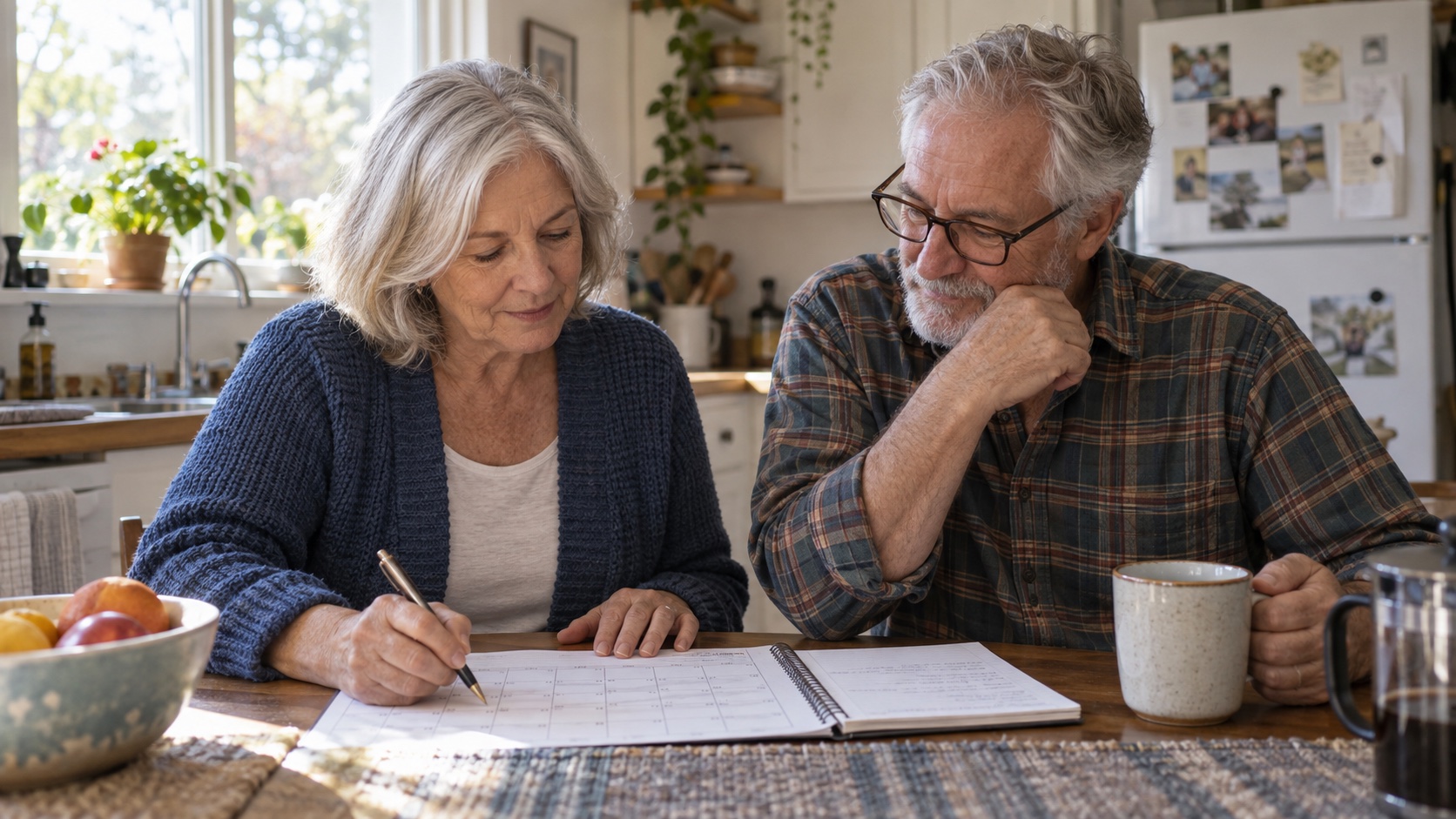
The study that put caregiver health on the map is the Caregiver Health Effects Study. Schulz and Beach followed elderly spouses — some caring for a disabled partner, some not — for about four and a half years. Caregivers reporting strain (the subjective load, not just the hours) had a 63% higher risk of death than non-caregiving controls, after adjusting for health differences at baseline (JAMA, 1999). Two details deserve emphasis. First, the mortality signal came from strain, not from caregiving per se — the objective duties mattered less than the felt burden. Second, the study's contrast group was older adults, which makes the size of the effect the more striking: in a population where mortality is already high, strained caregiving added a load comparable to a serious risk factor. This is the finding that created the "caregiver as second patient" framing — the person providing care becomes a clinical population in their own right.
What the Burden Does Physiologically
- 🩹 Slower repair: dementia caregivers' small wounds took about 24% longer to heal than controls' in a landmark study (The Lancet, 1995) — the same wound-healing channel the hostile-marriage page documents in conflict.
- 🦠 Quieter immune responses: spousal dementia caregivers showed weaker antibody responses to vaccination and poorer immune function that worsened with time in caregiving (Psychosomatic Medicine, 1991).
- 🔥 Inflammatory climb: over six years, caregivers' IL-6 — a proinflammatory cytokine — rose at roughly four times the rate of non-caregivers' (PNAS, 2003), the slow-burn pattern the brain-aging topic links to long-term decline.
- 🧬 Cellular aging: mothers of chronically ill children showed accelerated telomere shortening with years of caregiving (Epel et al., PNAS, 2004) — suggestive cellular evidence, not a clinical verdict.
- 😴 Fragmented sleep: night-time duties and vigilance erode the caregiver's sleep, feeding every mechanism above — the sleep topic owns that physiology.
The Burden Ledger
The landmark estimates, side by side — each from a different sample and design, so they describe a direction rather than a single population. The table below maps who carries the heaviest load.
| Caregiving context | What the evidence shows | Evidence |
|---|---|---|
| 🌱 Low-intensity help | Errands and a few weekly hours — neutral-to-positive health picture in population studies | Moderate |
| 🧠 Spousal dementia care, high hours | The strain profile: elevated mortality and immune wear in landmark studies | Severe |
| 🫂 Supported caregiver with respite | Burden partially offset; outcomes closer to non-caregivers | Moderate |
| 📉 Caregiver with own chronic conditions | Own management slips — blood pressure and glucose control worsen under strain | Severe |
| 🏥 First year after caregiving ends in loss | Elevated mortality concentrated in the transition — the widowhood effect the loneliness topic owns | Severe |
The Honest Counter-Data
The landmark studies are real, and so is the tension with population data. When researchers analyzed the large REGARDS cohort with propensity matching, family caregivers showed no excess mortality — and in some analyses a survival advantage over matched non-caregivers (Roth et al., American Journal of Epidemiology, 2013). A reappraisal of population-based studies reached the same uncomfortable conclusion: caregiving's average effect on mortality and physical health is small to null, and sometimes favorable (Roth, Fredman & Haley, The Gerontologist, 2015). The likely explanation is the "healthy caregiver effect": people become caregivers because they are well enough to do so, and population samples are dominated by the low-intensity help that most caregiving actually is — not the high-strain spousal dementia care of the landmark studies. Caregiving also supplies purpose, activity, and closeness, which the purpose topic documents as protective in their own right. The honest read holds both findings at once: the burden is real and concentrated, and the average caregiver is not the strained caregiver.
⚠️ Clinician territory — the second patient
If you are a caregiver, your own health belongs on the care plan. The evidence-based basics: your own screenings should not lapse (the quarterly audit fits), symptoms of depression and burnout deserve a clinician's attention rather than stoicism, and respite is not a luxury — regular time off is the intervention with the most consistent support in the caregiver literature. In geriatric practice, assessing the caregiver is standard care, not an afterthought.
Why Both Are True
The reconciliation is dose and context. Strain concentrates where care is intensive, intimate, and endless: dementia diagnoses (with their behavioral symptoms and decade-long course), co-resident spousal care, forty-plus hours a week, and thin support networks around the couple. In those conditions the caregiver's physiology looks like the landmark studies — the stress system running without a day off, exactly the profile the cortisol topic describes. In the average case — a few hours of help, a relationship of reciprocity, an end in sight — caregiving looks like engagement, not strain, and population studies show no harm. The practical translation is not "avoid caregiving" — it is that the risk lives in specific conditions, all of which are modifiable: intensity, duration, support, and respite.
The Marital-Longevity Chapter
Caregiving sits inside the marriage-mortality story as its late chapter. The spouse effect that protects health for decades inverts at the end: the partner who monitored your health now carries it, and their own markers slip while they do. Then the transition arrives — caregiving ends, and the surviving partner enters the widowhood window the loneliness topic documents, with elevated mortality concentrated in the first year. The literature's counsel for the long view: plan for this chapter while healthy. The couples who fare best are those whose support system never collapsed to a dyad — the network argument the tribe topic makes — and whose financial and medical plans assume the caregiver's health is a resource to protect, not a bottomless well.
The Protective Levers
- ⏸️ Respite, scheduled: regular time completely off duty — the most consistently supported intervention in the caregiver literature. Unplanned, unpaid breaks that never come are not respite.
- 🗣️ Support and psychoeducation: caregiver support programs improve depression and burden in meta-analyses — moderate effects, real ones.
- 😴 Sleep protection: the caregiver's sleep is a medical asset; night-duty rotation and sleep hygiene protect it.
- 🧘 Stress skills: the same down-regulation tools the breathwork page covers apply to caregiver strain — not as a fix for the situation, but as protection for the body inside it.
- 🩺 The caregiver's own appointments: the second patient's screenings, medications, and chronic-condition management are part of the care plan, not a competing priority.
Questions, Answered Briefly
- ❓ Am I at risk? Only the strained profile — high hours, dementia or intensive illness, co-resident spousal care, thin support. Low-intensity help shows no penalty in population data.
- ⏳ Does caregiving shorten life? The landmark study says strained caregivers die sooner; the population studies say caregivers on average do not. Both are true — the risk lives in the strained subset.
- 🛟 What actually helps? Scheduled respite, support programs, protected sleep, and the caregiver's own medical care — modest effects individually, compounding together.
- 🩺 When should a caregiver see a clinician? When strain shows up as depression, insomnia, or neglected own conditions. Caregiver burnout is a recognized clinical picture, and treating it is standard practice.
The Bottom Line
- The burden is real and measurable: strained spousal caregiving shows up in mortality, immunity, wound healing, and stress hormones.
- Strain, not caregiving, is the variable: felt load, intensity, and support — not the role itself — predict the physiology.
- The average case is benign: population studies find no harm, and sometimes a benefit, in typical low-intensity caregiving.
- Protect the second patient: scheduled respite, the caregiver's own medical care, sleep, and support networks are the evidence-backed levers.
Related Topics
- Schulz & Beach, "Caregiving as a risk factor for mortality: the Caregiver Health Effects Study," JAMA (1999)
- Vitaliano, Zhang & Scanlan, "Is caregiving hazardous to one's physical health? A meta-analysis," Psychological Bulletin (2003)
- Pinquart & Sörensen, "Differences between caregivers and noncaregivers in psychological health and physical health: a meta-analysis," Psychology and Aging (2003)
- Kiecolt-Glaser et al., "Slowing of wound healing by psychological stress," The Lancet (1995)
- Kiecolt-Glaser et al., "Spousal caregivers of dementia victims: longitudinal changes in immunity and health," Psychosomatic Medicine (1991)
- Kiecolt-Glaser et al., "Chronic stress and age-related increases in the proinflammatory cytokine IL-6," PNAS (2003)
- Epel et al., "Accelerated telomere shortening in response to life stress," PNAS (2004)
- Roth et al., "Family caregiving and all-cause mortality: findings from a population-based propensity-matched analysis," American Journal of Epidemiology (2013)
- Roth, Fredman & Haley, "Informal caregiving and its impact on health: a reappraisal from population-based studies," The Gerontologist (2015)