Purpose in Dementia Care
When memory fails, purpose does not have to. A person who can no longer track a to-do list can still set the table, feed the bird, and be the one who greets visitors — roles and rituals keep personhood alive long after cognition thins. This page reviews what the evidence says about purpose-preserving dementia care, which approaches hold up, and where the honest boundaries sit.
What the evidence supports
- Person-centred care — treating the person, not the disease — is the foundation of modern dementia-care guidelines (Kitwood's work, adopted worldwide).
- Reality orientation showed modest pooled benefits on cognition in a Cochrane review (Spector et al., 2000).
- Structured roles and routines measurably reduce agitation and improve quality of life in many care settings, though most trials are small.
What remains uncertain
- Validation therapy, though widely used, has insufficient trial evidence for reliable conclusions (Neal & Barton Wright, Cochrane, 2003).
- Effect sizes for engagement approaches are modest and vary with staff training and setting — what works in one home may not transfer.
- No approach has been shown to slow the underlying disease; these are quality-of-life and function interventions, not treatments.
Evidence last reviewed: August 15, 2026. Conclusions may change as new research is published.
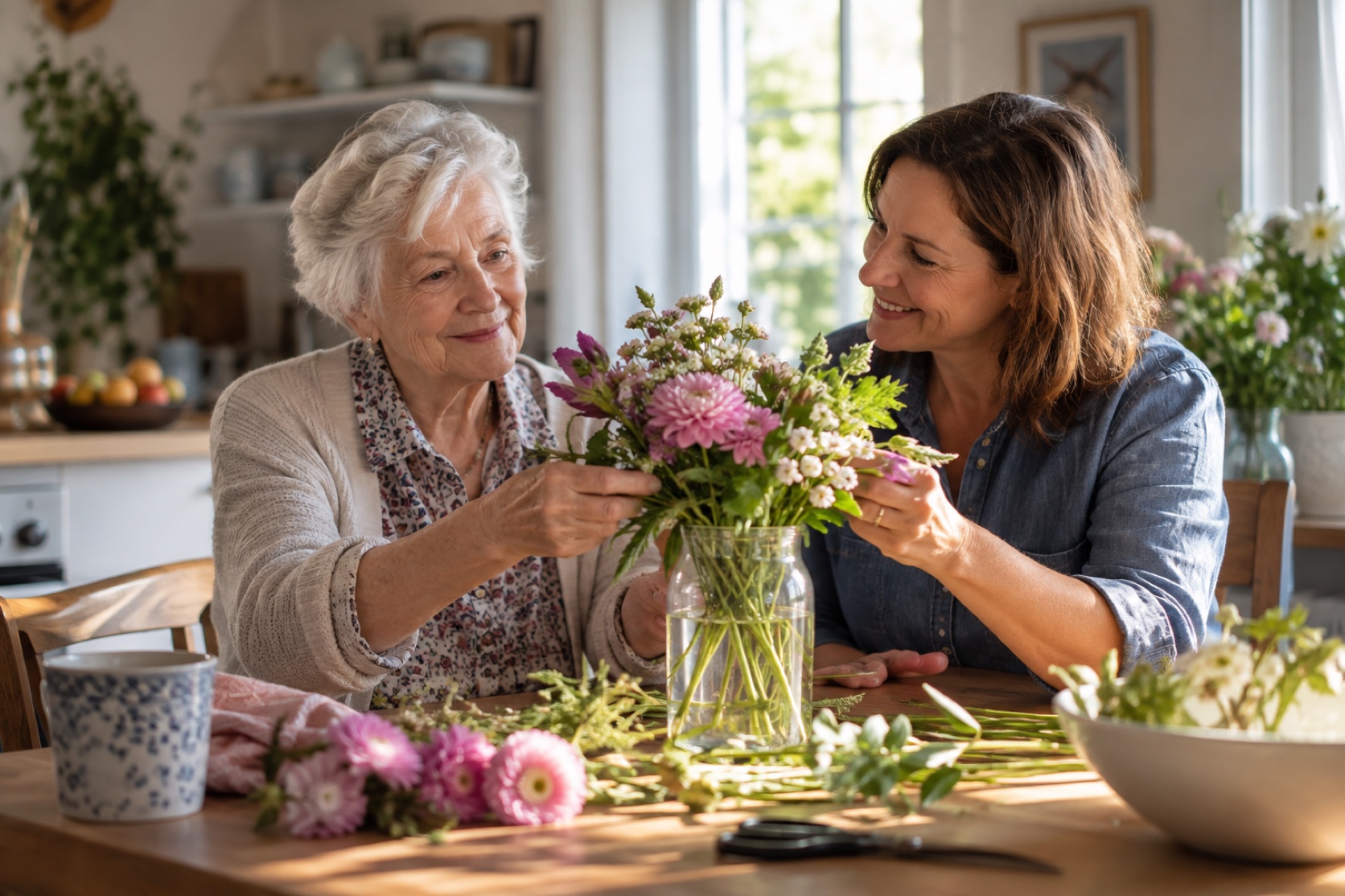
Personhood Before Medicine
The intellectual foundation of modern dementia care is Tom Kitwood's Dementia Reconsidered (1997). Kitwood's argument was radical at the time and is now the field's common sense: dementia care had been organized around the disease — managing deficits, preventing harm — and in doing so had systematically stripped people of the standing that keeps them human. He called that standing personhood: the status we grant one another through relationship. His inventory of everyday harms — infantilization, outpacing, disempowerment, treating a grown adult as a task to be completed — reads like a list of the ways institutions erased purpose by accident. The correction was not a drug. It was a reorientation: build the day around the person's remaining capacities, their history, and their contributions, and personhood — and with it, behavior and mood — measurably improves.
Kitwood's framework became the spine of person-centred care, now the reference standard across national guidelines. Its core claim is the one this series keeps encountering: purpose is protective even when cognition is gone — not because it restores memory, but because it restores the person's place in the world. The parent topic documents what purpose does in healthy aging; this page is about the harder case, where the brain itself is failing.
Roles and Rituals: The Evidence
The practical translation of person-centred care is roles and rituals: recurring, meaningful jobs and rhythms that a person with dementia can still perform and be recognized for. The evidence is spread across small trials and care-quality studies rather than one landmark experiment, and it is worth reading at its honest size:
- 🧺 Contribution beats entertainment. Programs built on real roles — folding, sorting, setting tables, caring for plants, greeting visitors — reduce agitation and improve engagement more reliably than passive activities, in the studies that compare them directly.
- 🕰️ Rituals anchor the day. Fixed rhythms (morning coffee service, the afternoon walk, the evening song) cut anxiety and sundowning — the disorientation spike at day's end — by making time legible again.
- 🧩 Ability-matched design matters. Montessori-based activity programs — hands-on tasks matched to remaining capacity — show engagement and mood benefits in small trials; the principle generalizes: the role must fit what the person can still do well.
- 🎵 Familiar material cuts through. Music and routines from the person's own past recruit spared memory systems, and are among the more consistently positive (if modestly evidenced) engagement tools.
What the Cochrane Reviews Say
Two named techniques dominate the popular literature and deserve the evidence check the reviews provide. Reality orientation works by repeatedly re-anchoring the person in time, place, and person — clocks, calendars, naming the day. The Cochrane review pooled six small trials and found evidence of modest benefit on cognition and behavior (Spector et al., 2000) — a rare named approach with trial support behind it. Validation therapy takes the opposite stance: meet the person in their emotional reality rather than correcting it. It is humane, popular with families, and almost untested — the Cochrane review located only two trials and concluded the evidence was insufficient for reliable conclusions (Neal & Barton Wright, 2003). That is not a verdict against it; it is a verdict of not-yet.
| Approach | Core idea | What the evidence shows | Read |
|---|---|---|---|
| Person-centred care (Kitwood) | Preserve personhood: identity, occupation, inclusion, attachment, comfort | Foundation of modern guidelines; benefits mostly shown through care-quality research, few formal trials | Foundational, few trials |
| Reality orientation | Re-anchor time, place, and person with cues and conversation | Pooled Cochrane evidence of modest cognitive and behavioral benefit | Cochrane-positive |
| Validation therapy | Meet the person's emotional reality; don't correct | Two small trials; insufficient evidence for firm conclusions | Limited |
| Montessori-style activity | Hands-on roles matched to remaining ability | Small trials show engagement and mood benefits; under-powered | Emerging |
Building a Role-Rich Day
The practical design rules fall out of the evidence, and most cost nothing but attention:
- 🧺 Find the jobs that remain. What can the person still do well — folding laundry, watering plants, sorting mail, greeting guests? Give them the real version of it, with recognition attached. Contribution is the point; correctness is not.
- 🕰️ Anchor three rituals a day. Morning, midday, evening — fixed, meaningful rhythms make time legible and cut the late-day disorientation spike. The ritual matters more than its content.
- 🎵 Use the spared systems. Music, song, and well-worn skills from the person's history recruit memory systems that outlast the others. Build roles from what the past already trained.
- 🔁 Follow the person's rhythm, not the schedule's. Meet them in their reality where correction buys nothing and distress; save correction for matters of safety.
- 🤝 Keep them needed. A person who is still needed — who walks the dog's leash, reads to a grandchild, waters the basil — is a person with a role. The roles are the medicine, administered daily.
🤝 Personhood is not a treatment target
A caution that belongs at the center of this page: person-centred care is primarily about dignity, and its most important effects may not show up on any cognitive scale. Families sometimes adopt these practices hoping for measurable improvement and feel the effort failed when the decline continues — which it will. The honest framing: roles and rituals change the quality of the days, not the slope of the disease. That is enough of a reason; it is also the whole reason.
For Caregivers: The Hardest Job
Most dementia care worldwide is delivered unpaid, by family — a role that outlasts savings, careers, and sometimes the caregiver's own health. The evidence on caregiver burden is grim and consistent: elevated rates of depression, sleep loss, and inflammatory markers among long-term caregivers, with burnout the near-universal risk. The purpose-preserving logic applies to the caregiver too: sustainable care requires the caregiver's own roles to survive — their friendships, their work, their time away. Respite is not a luxury that competes with care; it is part of care. And a boundary worth stating plainly: when behavior changes arrive suddenly, when safety is at issue, or when a medication question arises, the next step is a clinician — dementia care is clinician territory, and nothing on this page replaces it.
The purpose-through-service topic covers the giving side of this equation — including the compassion-fatigue caution — and purpose after retirement covers the transition that makes many family caregivers available in the first place.
Questions, Answered Briefly
- 💊 Do these approaches replace medication? No. They address engagement, mood, and behavior. Medications for dementia symptoms are a separate, clinician-managed decision; the two are complementary, not competing.
- ❓ Is validation therapy worth using if the trials are weak? It is humane, low-cost, and consistent with person-centred principles — but adopt it as a stance, not as a treatment with an expected outcome.
- 🏠 Do roles help at home or only in care facilities? The evidence is mostly facility-based, but the mechanism — contribution, rhythm, recognition — transfers directly, and home care has the advantage of the person's own history to build from.
- 📉 Will this slow the disease? No approach on this page has been shown to slow the underlying pathology. What changes is the lived quality of the time that remains — which is the goal being measured here.
The Bottom Line
- Personhood is the first-line frame in dementia care — Kitwood's person-centred model turned the field from managing deficits to preserving roles.
- Roles and rituals work through contribution, rhythm, and recognition — real jobs, fixed anchors, and spared skills like music, not passive entertainment.
- The named techniques are unevenly evidenced: reality orientation has modest Cochrane support; validation therapy is humane but essentially untested.
- Expect quality of days, not a change in the disease's slope — and protect the caregiver's own roles, because sustainable care runs on them.
Related Topics
- Kitwood T, Dementia Reconsidered: The Person Comes First, Open University Press (1997)
- Spector A et al., "Reality orientation for dementia," Cochrane Database of Systematic Reviews (2000)
- Neal M, Barton Wright P, "Validation therapy for dementia," Cochrane Database of Systematic Reviews (2003)
- Brooker D, "What is person-centred care in dementia?" Reviews in Clinical Gerontology (2003)
- World Health Organization, "Dementia" fact sheet (2023)