The Evening Cascade, Hour by Hour
Sleep is not something you do at bedtime — it's something you stop doing wrong, hour by hour, all the way back to the afternoon. The cascade is that countdown: caffeine, alcohol, food, screens, and light each retired on its own schedule so that by lights-out the only thing left is the sleep itself.
What the evidence supports
- Caffeine within 6 hours of bed measurably disrupts sleep even in people who say it doesn't — the 8–10 hour line is a safety margin on a well-replicated finding.
- Alcohol before bed shortens REM onset latency but fragments and degrades the second half of the night, at any dose.
- Evening light exposure delays melatonin onset; warm showers 1–2 hours before bed improve sleep onset across meta-analyzed trials.
What remains uncertain
- The blue-light-specific effect of screens is real but modest in size — content arousal and the sheer opportunity cost of scrolling may matter as much.
- The 3-hour food rule has mixed trial support; the evidence is strongest for large and spicy meals, weakest for small snacks.
Evidence last reviewed: August 13, 2026. Conclusions may change as new research is published.
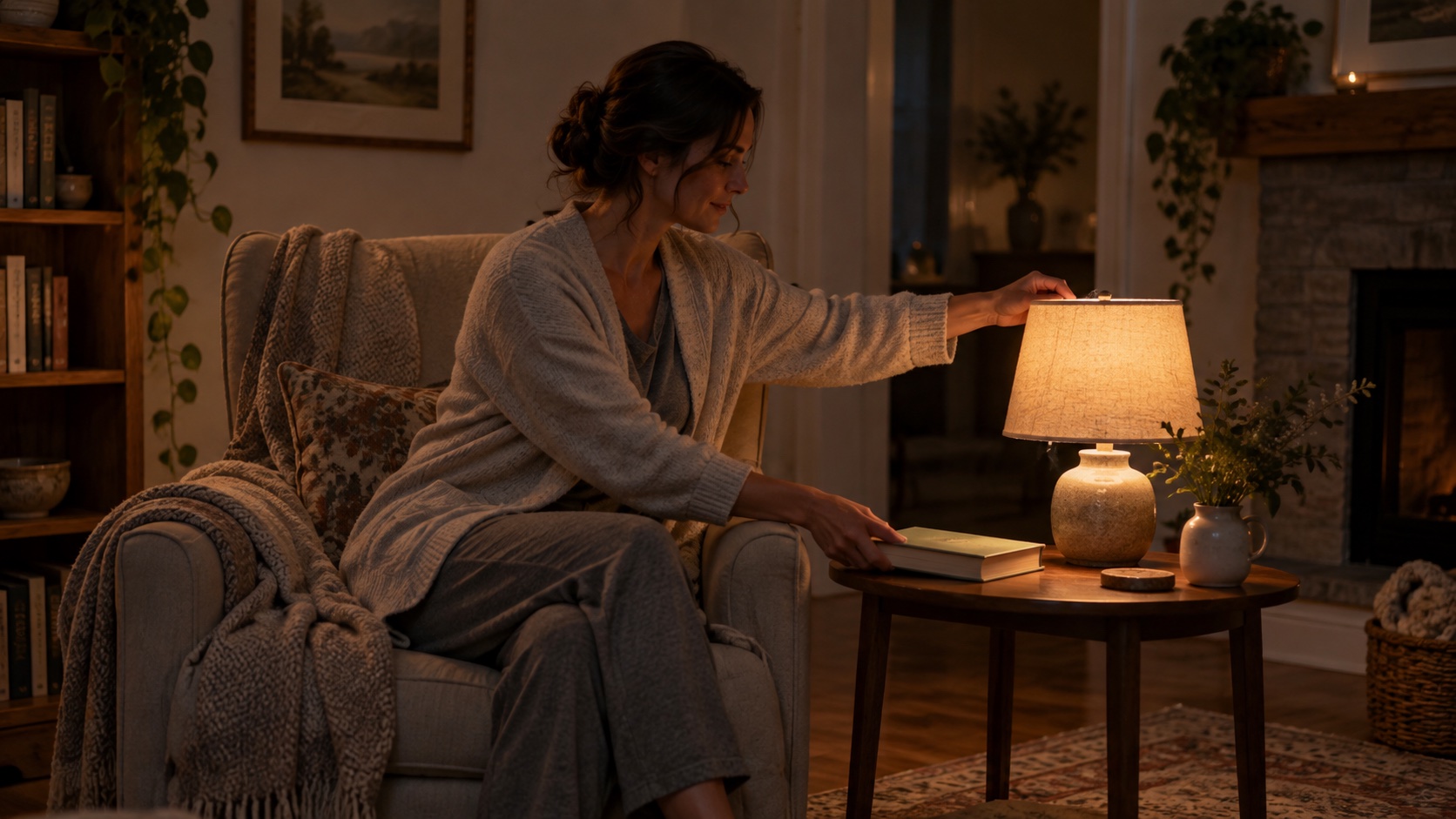
The Cascade, Built Backwards
Start at lights-out and walk back. Each line of the cascade removes one arousal input at the hour its chemistry or habit makes it matter. The order isn't arbitrary; it's a queue of chemistry and behavior, longest-acting first.
- 🧮 The starting point — lights-out comes from Part 2's anchor: wake time minus your sleep need. If wake is 6:30 and you need 7.5–8 hours, lights-out lands 22:30–23:00. The arithmetic is owned by When to Sleep.
- 🧪 Longest-acting first — caffeine has a half-life of hours; a bright screen suppresses melatonin in minutes. The cascade is ordered by how long each input keeps working after you stop it.
- 🎯 The cascade is a floor, not a ceiling — hitting every line exactly is rare; the point is that missing one line by 30 minutes still leaves a system, not a collapse.
- 📅 The first lines are daytime decisions — the caffeine cutoff happens in the afternoon. The evening you want starts hours before the evening you're in.
The Cascade, Hour by Hour
The whole protocol on one table. Times count back from lights-out; each row removes one input, and each has a verdict.
| Time before bed | The cutoff | What it buys | Verdict |
|---|---|---|---|
| 8–10 hours | ☕ Caffeine — last cup by early afternoon | At a 5–6 hour half-life, an afternoon cup is mostly gone by lights-out | Good |
| 4 hours | 🍷 Alcohol — last drink | Damage reduction, not neutralization: any amount degrades the second half of the night | Moderate |
| 3 hours | 🍽️ Food — kitchen closes | Late meals delay onset and worsen reflux; a small protein snack is the exception | Moderate |
| 1–2 hours | 💼 Work & email — inbox closed | Cognitive arousal keeps the sympathetic system idling long after the laptop shuts | Good |
| 1 hour | 📱 Screens — displays off | The blue-light effect is real but modest; content and the stopping itself matter as much | Moderate |
| 60–90 minutes | 💡 Dim the house — halve the lights | Overhead light suppresses melatonin; dimness is the body's wind-down cue | Moderate |
| 0–30 minutes | 🛏️ Bedroom entry — the ritual | A consistent sequence conditions sleep onset; the room does the persuading | Good |
The cascade at a glance — each row's evidence is unpacked in the sections below.
Product picks are generic categories, not brands. We may earn a commission on Amazon or iHerb purchases at no cost to you — this never changes our evidence conclusions. Full disclosure
Blackout shades or curtains
May reduce unwanted bedroom light and make a dark sleep setting easier to maintain.
⚠️ None expected from the product itself; install securely and preserve a safe route to exits.
Check price on Amazon →Caffeine: The 8–10 Hour Line
Caffeine is the longest-acting input in the cascade, so it retires first. The honest numbers matter more than the slogan.
- ⏳ The half-life math — caffeine's half-life averages ~5–6 hours, but the range across people is 2–12. A 150 mg cup at 15:00 leaves ~57 mg circulating at 23:00; the same cup at 21:00 leaves over 130. Slow metabolizers run even hotter.
- 🚫 The cutoff — last caffeine 8–10 hours before lights-out. For a 23:00 bedtime, that's 13:00–15:00 — which means the afternoon coffee is the last one, not the first.
- 🧠 Why even when you "sleep fine" — caffeine's cost is invisible to the drinker: studies show sleep fragmentation and less deep sleep at doses that don't stop people from falling asleep at all.
- 📚 The full ledger — the dose ceilings, the slow-metabolizer genetics, and the alcohol interaction live in the Caffeine, Alcohol & Blue Light pillar topic.
Alcohol: The 4-Hour Line
The honest sentence about alcohol and sleep is short: any amount degrades sleep quality. The cascade rule is damage reduction, not neutralization.
- 🍷 What it actually does — alcohol is a sedative that wears off mid-sleep: it suppresses REM early, fragments the night, and produces rebound wakefulness in the second half. People fall asleep faster and sleep worse.
- ⏱️ The 4-hour rule — last drink at least 4 hours before lights-out. It is a harm-reduction line, not a permission slip: the fewer nights with alcohol in the pipeline, the better the architecture.
- 🥂 One drink still counts — the REM suppression and fragmentation appear even at low doses in laboratory studies; there's no dose below which alcohol is sleep-neutral.
- 📚 The full accounting — the dose-response evidence and the alcohol-caffeine-sleep interaction are owned by the Caffeine, Alcohol & Blue Light pillar topic.
Food: The 3-Hour Line
A full stomach is a daytime organ working the night shift. The 3-hour line gives digestion time to hand the body over to sleep.
- 🍽️ The cutoff — the kitchen closes ~3 hours before lights-out. Large or heavy meals in the last hours delay sleep onset and, lying down, invite reflux into the mix.
- 🥛 The exception: a small protein snack — genuinely hungry at bedtime? A small, protein-leaning snack (a few spoonfuls of yogurt, cottage cheese, a glass of milk) is the sanctioned exception. Skip the sugar and the volume.
- 🌶️ What to skip close to bed — large portions, heavy fat, and spice are the offenders with the most consistent evidence against them; alcohol's already gone by this hour.
- 📚 The meal-timing evidence — the When to Sleep topic owns the timing literature, including how late meals interact with your chronotype.
Book or skill-learning workbook
Can support sustained reading or structured skill practice.
⚠️ None expected; a product cannot prevent dementia or replace assessment of new cognitive symptoms.
Check price on Amazon →Work, Screens, and the Dimming Protocol
The last two hours are about arousal and light — the two inputs the body reads as "still daytime." Each retires on its own schedule.
- 💼 Work & email — closed 1–2 hours out — problem-solving keeps the sympathetic system idling; the inbox stays open in the mind after the tab closes. The closing ritual: capture tomorrow's first task on paper, then shut it down.
- 📱 Screens — off 1 hour out — the honest blue-light verdict: evening screen light measurably delays melatonin onset, and the effect size is moderate. The content (the argument, the scroll, the one-more-video) is at least as disruptive as the spectrum.
- 💡 The dimming protocol — halve the lights 60–90 minutes out — light is the strongest circadian signal there is; halving the house's brightness in the last hour is the body's "night is coming" cue. Use lamps, not overheads.
- 🛋️ Lamps below eye level — light arriving from below the eyes is less suppressive to melatonin than overhead light. Table lamps and floor-level light beat ceiling fixtures every time.
- 📚 The light evidence — the melatonin-suppression numbers and the honest screen-light effect sizes are owned by the Caffeine, Alcohol & Blue Light pillar topic.
The Wind-Down Menu
The cascade removes inputs; the wind-down menu adds one or two that push the other direction. Choose 1–2 items — this is a menu, not a checklist.
| Menu item | The dose | Fits when | Evidence |
|---|---|---|---|
| 📖 Paper reading | 20–30 min | The default choice; the classic wind-down | Moderate |
| 🚿 Warm shower or bath | 10–20 min, 1–2 h before bed | The post-bath core temperature drop helps sleep onset | Good |
| 🧘 Gentle stretching or yoga | 10–20 min | Tight body, busy mind; no vigorous work | Moderate |
| 😮💨 Slow breathing, 4 in / 6 out | 5–10 min | Racing thoughts; pairs with anything | Moderate |
| ✍️ Journaling or a brain dump | 5–10 min | The 2 a.m. rehearsal problem — get it on paper first | Moderate |
The wind-down menu — pick one or two, keep them dim, and let the cascade do the heavy lifting.
The Bedroom Entry Ritual
The last 30 minutes are a sequence, not a scramble. Run the same one every night and the brain learns that this sequence ends in sleep.
- 🚪 The sequence — teeth, face, last glass of water, room checks (cool, dark, quiet), phone onto its charger outside the bedroom, then into bed with the paper book. Same order, every night.
- 🌡️ The room check — 18–20°C, blackout, quiet. The full environment spec — temperature, darkness, noise, bedding — is built out in Bedroom Engineering (Part 4).
- 📵 The phone leaves the room — the single highest-leverage move in the whole cascade: it removes the screen, the scroll, and the 2 a.m. check in one motion.
- 🧠 Why the ritual works — sleep onset is conditioned, not commanded. The ritual is a cue stack; run it long enough and the sequence itself starts the transition. The stage architecture — what each stage of the night is for — lives in the Deep Sleep vs REM pillar topic.
Where the Evidence Lives
This page is the operational layer. The Sleep pillar owns the science behind each cutoff, and this series references rather than repeats it:
- ☕🍷📱 The three saboteurs — the Caffeine, Alcohol & Blue Light topic owns the full evidence: caffeine half-life genetics, alcohol's dose-response on sleep architecture, and the honest blue-light effect sizes.
- 🛏️ The bedtime arithmetic — the When to Sleep topic owns chronotype, sleep need, and how to turn the wake anchor into a lights-out time.
- 🌊 What you're protecting — the Deep Sleep vs REM topic owns what each stage does — why the cascade's job is keeping the night's deep sleep and REM intact, not just getting you unconscious.
What to Do When It Goes Wrong
The cascade fails in predictable places, and most failures have a same-week fix. Five situations that actually happen:
- 🚩 You're in bed on time but can't fall asleep — give the cascade two weeks before judging it; the body adjusts on a lag. Meanwhile, audit the caffeine line first — it's the most common silent leak, and half-life varies person to person. Still stuck after two weeks? That's the When Sleep Won't Come path.
- 🚩 Evenings keep getting hijacked — work runs long — pre-decide the last meeting and last email of the day in the morning, and calendar the 1–2 hour work cutoff like a meeting with yourself. The cascade starts at the caffeine line, which is an afternoon decision.
- 🚩 You wake at 3–4 a.m. and lie there — late alcohol or a heavy meal fragments the second half of the night. Fix those two lines first, then apply the 20-minute rule from When Sleep Won't Come.
- 🚩 The dimming step feels pointless — it's the subtlest line, and it compounds with the screens cutoff: 60–90 minutes of halved light measurably shifts melatonin onset. Keep it, and put the lamps below eye level — that detail is doing real work.
- 🚩 You're hungry at bedtime after closing the kitchen at 3 hours — use the exception, not the violation: a small protein snack 1–2 hours out if needed. If heartburn recurs, tighten the food line.
Guided journal or notebook
Can support reflection, planning, or brief stress-management practices.
⚠️ Journaling may be distressing for some people; it is not a substitute for mental-health treatment or crisis support.
Check price on Amazon →Training inside the wind-down? Making Evening Work.
Questions, Answered Briefly
- ❓ Which line of the cascade matters most? — The caffeine line: it has the strongest evidence, the longest reach, and it's the one people most often violate invisibly. After that, the consistency of the whole sequence beats any single hour.
- ❓ Do blue-light-blocking glasses fix late screens? — They attenuate melatonin suppression somewhat, but trials on real-world sleep outcomes are mixed. They're a bridge, not a fix: screens-off an hour out still wins.
- ❓ What if dinner is unavoidably at 21:00 and bed is 23:00? — Two hours beats none. Keep that dinner light and protein-forward, skip dessert and alcohol, and consider a small earlier meal if this is a weekly pattern, not an exception.
- ❓ Does herbal tea count as caffeine? — Most herbals (chamomile, rooibos, peppermint) are caffeine-free and fine as a ritual; the sleep-promoting evidence for them is modest. Decaf coffee still carries trace caffeine, and green tea carries the real thing — check the label.
🌆 The countdown, run backwards
Lights-out first, then walk back: caffeine 8–10 hours out, alcohol 4, food 3, work 1–2, screens 1, dim the house 60–90 minutes out. Each line removes one arousal input — and by the time you enter the bedroom, the room does the persuading.
The Bottom Line
- Build the evening backwards from lights-out — the cascade is a queue, longest-acting input first.
- Caffeine 8–10 hours out, alcohol 4 — and alcohol's line is damage reduction, never neutralization.
- Food 3 hours out (small protein snack excepted), work 1–2, screens 1.
- Dim the house, pick 1–2 wind-down moves, run the bedroom ritual — the last hour does the persuading.
This Page in One Workflow
- Set lights-out — from Part 2's wake anchor: wake time minus 7.5–8 hours.
- Fix the caffeine line — last cup 8–10 hours before lights-out; afternoon coffee is the last one.
- Calendar the cutoffs — alcohol 4 hours out, kitchen 3, work and email 1–2.
- Run the dim + screens + menu hour — screens off, lights halved below eye level, one or two wind-down moves.
- Enter the bedroom on the ritual — same sequence, same order, phone outside the room.
The Daily Checklist
- Last caffeine by the 8–10 hour line — afternoon coffee was the last one
- Last alcohol by the 4 hour line, or none
- Kitchen closed ~3 hours before lights-out — small protein snack excepted
- Work and email closed 1–2 hours out — tomorrow's first task written down
- Screens off 1 hour out — phone charging outside the bedroom
- House halved in brightness 60–90 minutes out — lamps below eye level
- One or two wind-down moves done, then the bedroom entry ritual
The Weekly Checklist
- Cascade audit — which line broke most this week, and what fixes it
- Lights-out vs plan compared — wake anchor math from Part 2 still holds
- Caffeine half-life reality check — is the last cup creeping later
- One new wind-down menu item tested this week
- Apnea red flags reviewed — loud snoring, pauses, daytime sleepiness
Go Deeper: The Evening Cascade, Hour by Hour
These five companion pages turn the topic into smaller, testable practices.
Related Topics
- Drake C, Roehrs T, Shambroom J, Roth T, "Caffeine effects on sleep taken 0, 3, or 6 hours before bedtime," Journal of Clinical Sleep Medicine (2013)
- Clark I, Landolt HP, "Coffee, caffeine, and sleep: A systematic review of epidemiological studies and randomized controlled trials," Sleep Medicine Reviews (2017)
- Ebrahim IO, Shapiro CM, Williams AJ, Fenwick PB, "Alcohol and sleep I: effects on normal sleep," Alcoholism: Clinical and Experimental Research (2013)
- Chang AM, Aeschbach D, Duffy JF, Czeisler CA, "Evening use of light-emitting eReaders negatively affects sleep, circadian timing, and next-morning alertness," PNAS (2015)
- Haghayegh S, Khoshnevis S, Smolensky MH, Diller KR, Castriotta RJ, "Before-bedtime passive body heating by warm shower or bath to improve sleep: A systematic review and meta-analysis," Sleep Medicine Reviews (2019)