Fitting sports & hobbies in
The 3-2-1 formula is a skeleton, and hobbies are supposed to hang off it. But a hobby is not neutral training: a hard tennis match is an interval session wearing a costume, a long hike is zone 2 with an eccentric-strength tax, and yoga is stability work some weeks and near-rest others. The skill is accounting — counting each hobby against the right slot and trimming the formula around it, so the fun adds to the week instead of overdrawing it.
What the evidence supports
- Concentrated recreational activity still lowers mortality substantially — the weekend-warrior cohorts show the hobby pattern is worth a great deal (O'Donovan et al., JAMA Internal Medicine, 2017).
- The overtraining syndrome is driven by accumulated intensity and inadequate recovery, and shows up early in simple markers like mood and resting heart rate (Meeusen et al., MSSE, 2013).
- Balance-challenging exercise reduces falls in older adults (Sherrington et al., Cochrane, 2019) — the principle behind counting standing yoga and balance-heavy hobbies as real training.
What remains uncertain
- No trial maps specific hobby sports onto the 3-2-1 slots — the table below is sensible accounting, not tested prescription.
- Yoga's intensity varies so much by style that a single label is meaningless — restorative and vinyasa are different sports.
- Injury rates for recreational sports in middle age come mostly from surveillance data, not trials.
Evidence last reviewed: August 15, 2026. Conclusions may change as new research is published.
The Accounting Principle
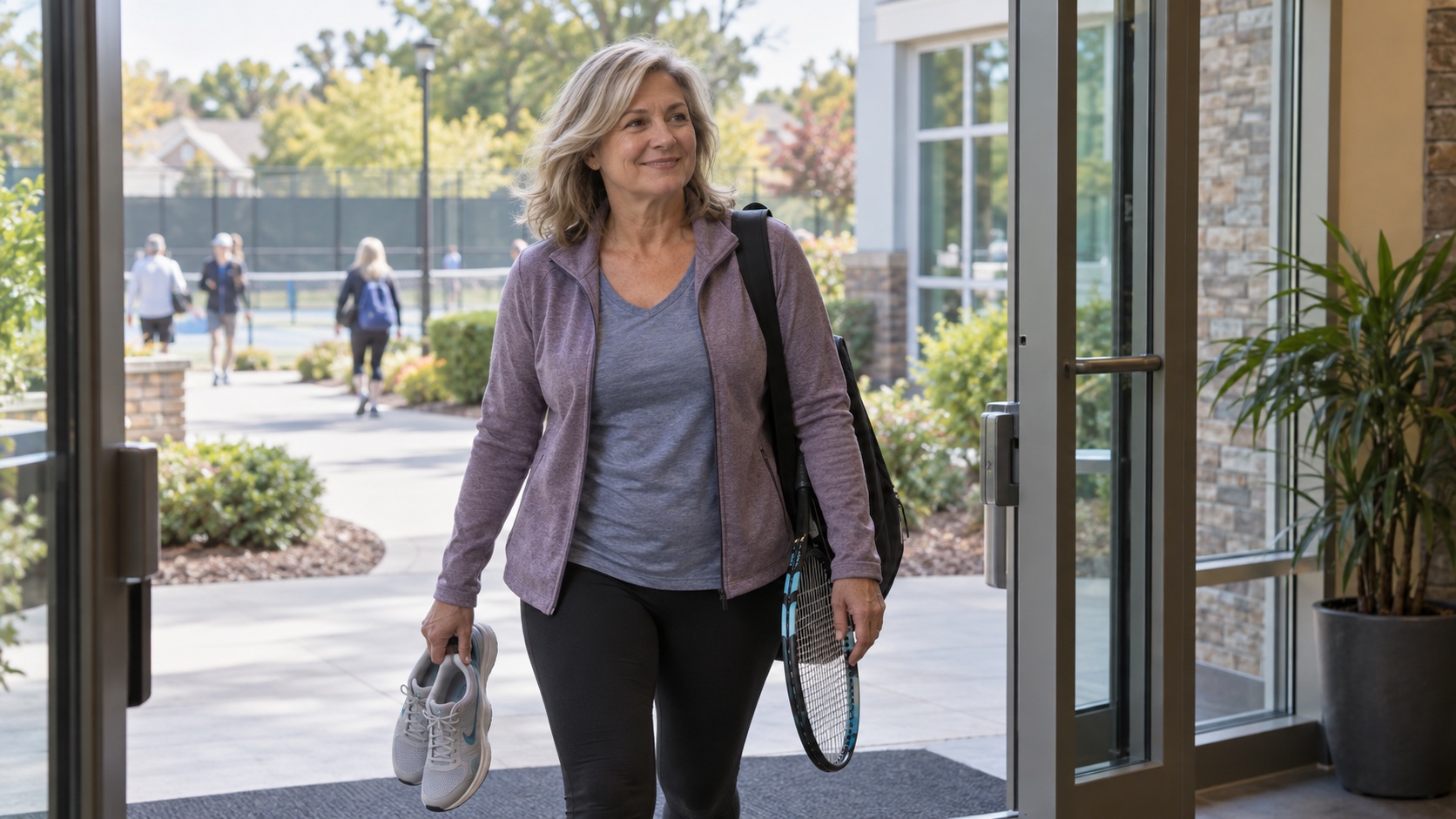
Every hobby session starts with one question: which slot does this activity most resemble, and how hard did I do it? Count it there, then trim the matching formula slot that week. A hobby week keeps the shape of 3-2-1 and swaps the cast — the point of the formula was never the specific activities, which is why the parent topic insists the components matter more than the brand name. Three rules keep the accounting honest:
- 🧮 Count hard hobbies as hard sessions. A singles match that leaves you gasping is an interval day — it replaces, not adds to, the scheduled 4×4.
- 🛌 Never trim the rest day. Sports load you; rest does not. The hobby replaces a training slot, not the recovery slot.
- 📍 Space hard hobbies from leg days. The placement logic from the hard-days page applies to sports too — a brutal match on Saturday is a leg-taxing interval session, so Thursday's squats should move.
Product picks are generic categories, not brands. We may earn a commission on Amazon or iHerb purchases at no cost to you — this never changes our evidence conclusions. Full disclosure
Smart band or smartwatch
Can make activity, exercise, and routine patterns easier to notice over time.
⚠️ Step, heart-rate, and sleep estimates can be inaccurate and may encourage unhelpful over-monitoring; consumer readings are not medical diagnoses.
Check price on Amazon →Tennis, Pickleball, and the Racket Family
Racket sports are intervals with extras. A singles tennis match is repeated high-intensity bursts with incomplete recovery — the metabolic signature of an interval session — plus lateral movement and rotational loading that no gym slot replicates. Count a genuinely hard match as your interval day and drop the scheduled 4×4 that week; doubles is moderate enough to count as an easy-to-moderate cardio day for most people. The extras to respect: tennis loads calves, Achilles tendons, shoulders, and the rotational chain, and middle-aged returners get hurt precisely there. The honest framing is that the sport is the training — if you want it to stay fun for decades, the strength slots are its injury insurance, which is the argument the strength-after-40 topic makes at length.
Pickleball deserves its own caution: the rallies are short and sharp, the court is small, and the injury risk is systematically underestimated by players who think of it as a gentle game. Treat a competitive pickleball session as an interval-adjacent day, not a rest-day activity, and warm up before the first point rather than after the first lunge.
Hiking and the Eccentric Tax
Hiking is the most formula-friendly hobby there is: flat or rolling terrain at a conversational pace is zone 2 by any definition, and a three-hour weekend hike can replace the long cardio day entirely. The subtlety is direction. Uphill sections are the interval work — effort rises to the point the talk test fails, which is exactly the boundary the zone 2 topic describes. Downhill is the hidden cost: descents load the quads eccentrically, which is the loading pattern that produces the most soreness. The day after a big descent, skip or soften the lower-body strength session — the legs are already in a recovery debt. Hiking poles are a cheap way to shed some of that descent load, and the practical rule is simple: hike as cardio, respect it as strength, and schedule leg days away from big descent days.
Yoga and the Mobility Family
Yoga is three different hobbies wearing one name. Vinyasa or power classes are light strength and mobility work — they count toward the stability slot, and for a beginner they may count as a partial strength session too. Restorative and yin classes are recovery: count them as rest-adjacent, closer to a nap than a workout. Most yoga of any style is not cardio — heart rate stays low in all but the hottest rooms. The overlap with the falls-prevention evidence is real but indirect: the balance-challenging postures that the Cochrane review (Sherrington et al., 2019) found protective show up throughout standing sequences, so a weekly standing yoga practice can serve as the dedicated stability session — the stability and mobility topic describes the same movements in gym clothes.
Everything Else, Briefly
- ⛳ Golf. Walking a course is five to eight kilometers — a legitimate easy cardio day if you walk and carry, and barely exercise in a cart. The swing rotation is not stability training, so keep the real stability slot.
- 🚲 Commuting by bike. Count the commute as cardio when the pace is steady — three commutes a week can replace one easy cardio day outright.
- 🏊 Swimming. Intervals or zone 2 depending on how hard you swim it — the same accounting as running, minus the joint load, which makes it the friendliest option for heavier or older athletes.
- ⚽ Soccer, basketball, and team sports. Hard intervals plus direction changes plus contact. Count them as the interval day and take the injury caution seriously — these are the highest injury-caution hobbies in the table below.
- 💃 Dance. Cardio plus balance plus joy — a genuine two-slot hobby when done seriously, and the best adherence story in the list.
- 🌱 Gardening. Light zone 1–2 work at best — a bonus, not a slot. Do not let it replace anything; let it be extra.
Hobby Accounting at a Glance
| Hobby (typical session) | Counts as | Trim that week | Watch out for |
|---|---|---|---|
| 🎾 Tennis, singles (hard match) | Interval day | The scheduled 4×4 | Calf, Achilles, shoulder; space from leg day |
| 🏓 Pickleball (competitive) | Interval-adjacent day | Shorten or drop the interval day | Sudden lunges and direction changes; warm up first |
| 🥾 Hiking (steep, long) | Zone 2 day with hill intervals | The long easy cardio day | Eccentric descent load — soften legs the next day |
| 🧘 Yoga (vinyasa / power) | Stability slot, partial strength | The dedicated stability session | Not cardio — keep the cardio slots anyway |
| ⛳ Golf (walking, carrying) | Easy cardio day | One easy cardio slot | Does not replace stability or strength work |
| ⚽ Soccer / basketball | Interval day | The scheduled 4×4 | Highest injury caution of the list in middle age |
The Overtraining Early-Warning System
The hobby week fails quietly, through accumulation rather than any single session. The consensus description of overtraining (Meeusen et al., MSSE, 2013) centers on exactly that: performance decline plus mood disturbance from sustained high load with inadequate recovery. The cheap weekly check is the same one the hidden-vital-signs topic builds: waking resting heart rate five or more beats above your usual baseline, grip strength trending down, sleep worse than usual, and the clearest signal of all — the hobby stops being fun. Two flags in one week is the trigger: swap the next hard hobby session for a zone 2 walk, and let the quarterly audit catch the slow drifts.
⚠️ Returning to a sport you haven't played in years?
The risk lives in the first six weeks, not in the sport itself. Start at half of your former volume, ramp over weeks rather than days, and treat sharp pain or pain that persists beyond two weeks as a reason to stop and see someone — that is clinician territory, not a warm-up problem. The mortality benefit of weekend-style sport is real (O'Donovan et al., 2017); the injury risk of an unramped return is real too.
Questions, Answered Briefly
- 🛌 Does a hobby day replace a rest day? No — sports load you and rest does not. A hobby replaces a training slot; the rest day stays.
- 🏓 I play pickleball five days a week — can I drop cardio? Count it, but keep at least one genuinely easy cardio day. The zone 2 base is what lets the bursts stay sharp, and easy work is the recovery your hobby is borrowing against.
- 🏋️ Should I train for my hobby? Yes — strength work is the injury insurance for racket and team sports in middle age, which is the entire case the strength-after-40 topic makes.
The Bottom Line
- Count every hobby against the slot it resembles — a hard match is an interval day, a long hike is a zone 2 day, vinyasa is a stability session.
- Trim the matching formula slot that week — hobbies swap into the shape; they do not stack on top of it.
- Respect the eccentric and direction-change taxes — descents, lunges, and rotation are where hobby injuries live.
- Watch the early-warning flags weekly — when the hobby stops being fun, that is the load talking.
Related Topics
- O'Donovan et al., "Association of 'Weekend Warrior' and Other Leisure Time Physical Activity Patterns With Risks for All-Cause, Cardiovascular Disease, and Cancer Mortality," JAMA Internal Medicine (2017)
- Meeusen et al., "Prevention, diagnosis, and treatment of the overtraining syndrome: joint consensus statement," Medicine & Science in Sports & Exercise (2013)
- Sherrington et al., "Exercise for preventing falls in older people living in the community," Cochrane Database of Systematic Reviews (2019)
- Bull et al., "World Health Organization 2020 guidelines on physical activity and sedentary behaviour," British Journal of Sports Medicine (2020)