The Hobby-Mortality Evidence
Can a stamp collection add years? Epidemiology treats leisure the way it treats sleep or exercise — as an exposure with a dose and a survival curve — and the cohorts keep finding the same shape: people who engage in leisure activities outlive people who do not, by margins that survive statistical adjustment. This page walks the actual numbers, cohort by cohort, and spends equal effort on the part the headlines skip: what these studies can and cannot say.
What the evidence supports
- Leisure-time physical activity is associated with meaningfully lower mortality across pooled cohorts of hundreds of thousands of adults.
- Frequent receptive arts engagement — museums, galleries, concerts, theatre — is associated with roughly 31% lower mortality over 14 years in the English Longitudinal Study of Ageing.
- Having a hobby, and participating in hobby groups, associates with lower mortality and slower functional decline in Japanese cohorts of older adults.
What remains uncertain
- Everything here is observational. Healthy, energetic, resource-rich people do more of everything, and statistical adjustment can never fully separate selection from effect.
- Most studies measure engagement at a single time point, yet hobby identities shift across decades.
- Whether the active ingredient is the activity itself, the mastery, the people, or the sense of purpose remains unresolved.
Evidence last reviewed: August 15, 2026. Conclusions may change as new research is published.
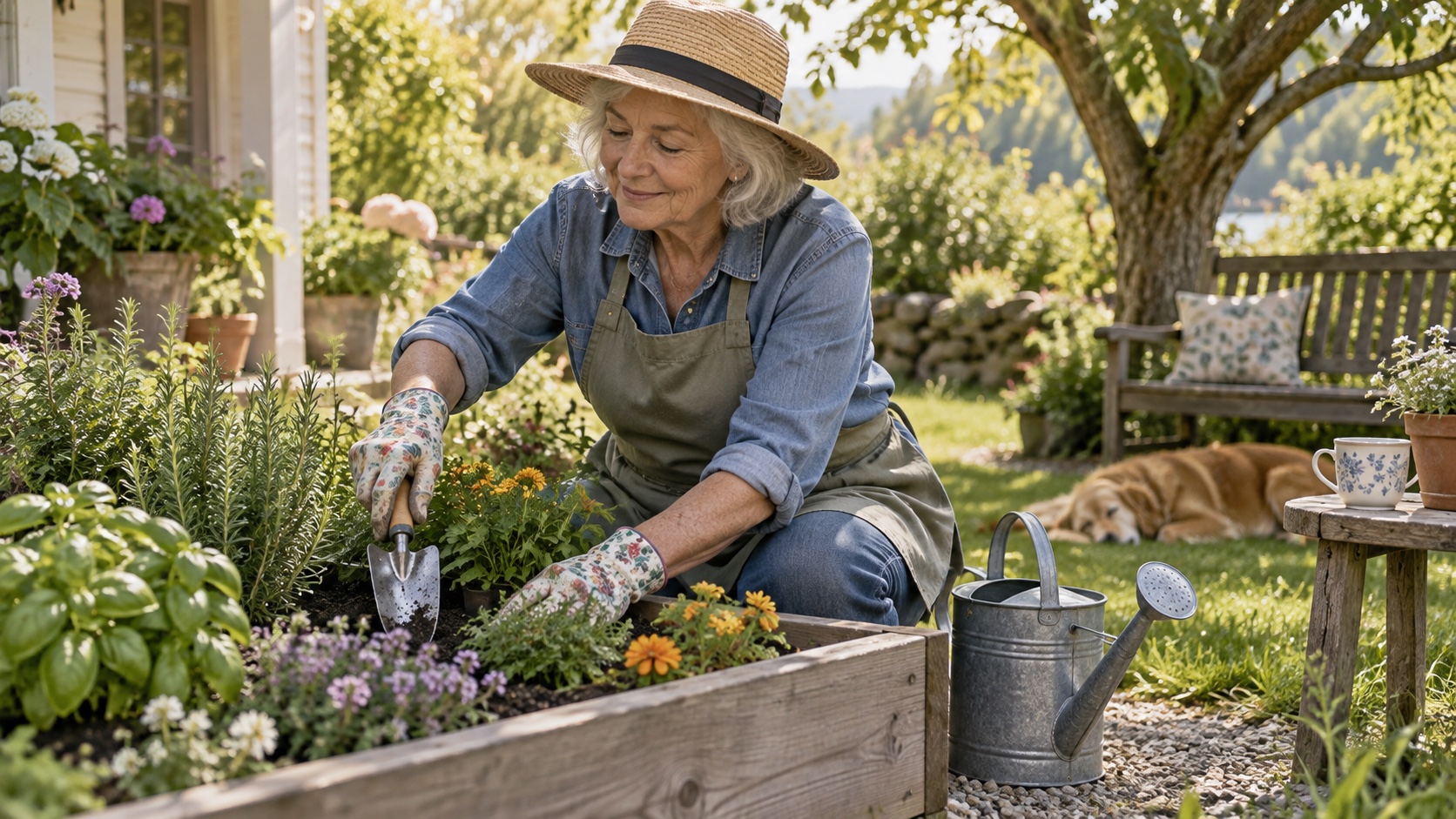
Leisure Is a Health Exposure
Public-health research long treated free time as the absence of work — a residual category with no biology attached. The past two decades changed that. Cohorts now record what people actually do with their evenings and weekends, then follow them for a decade or more and compare survival curves. The result is a small but stubborn literature in which leisure behaves like a health exposure: more engagement, in more of the right forms, tracks with lower mortality in a graded way. The parent Hobbies & Habits topic covers the machinery of why; this page owns the numbers themselves.
Three findings anchor the field. Leisure-time physical activity shows the cleanest dose-response, pooled across hundreds of thousands of people. Arts engagement — attending, not just making — shows a survival association of similar size in a long English cohort. And in Japan, the simple status of "having a hobby" tracks with living longer, independent of what the hobby is. Each claim comes with the same fine print: association, not causation.
The Pooled Activity Cohorts
The largest dataset in this space is not about hobbies narrowly — it is about leisure-time physical activity, the most measurable slice of leisure. A pooled analysis combined six prospective cohorts covering 661,137 adults and followed them for a median of about 14 years, cataloging each person's activity in MET-hours per week and comparing mortality against the inactive reference group (Arem et al., JAMA Internal Medicine, 2015). The curve is remarkable for two reasons: the benefit starts almost immediately, and it never clearly runs out.
Read the shape, not just the top bar. The smallest dose — under 7.5 MET-hours a week, a couple of short sessions — already associates with a 20% reduction relative to doing nothing. Doubling or tripling that buys the next 10 to 19 points. Beyond roughly 22.5 MET-hours the curve flattens, which matters for anyone tempted to turn a hobby into a training block. And the same pooled literature, in an earlier iteration, estimated the survival difference between active and inactive adults at several years of life expectancy — meaningful, but a population average, not a personal promise (Moore et al., PLOS Medicine, 2012).
Arts Engagement and Survival
The most directly hobby-shaped evidence comes from the English Longitudinal Study of Ageing. Among roughly 6,700 adults aged 50 and older followed for 14 years, people who engaged with receptive arts — museums, galleries, exhibitions, theatre, concerts, opera — every few months or more had a 31% lower risk of dying during follow-up than those who never engaged (Fancourt & Steptoe, BMJ, 2019). The association held after adjusting for age, sex, health, wealth, education, and social factors, and it showed a dose-response: occasional engagement helped less than frequent engagement.
Three honest glosses belong next to that number. First, "receptive arts" here means attending cultural venues — a proxy that also captures mobility, income, and a functioning social calendar, which is exactly why the adjustment list matters and why residual confounding still can't be ruled out. Second, the effect was spread across causes of death, not concentrated anywhere dramatic, which fits a broad pattern of engagement rather than a single mechanism. Third, engagement was measured once; people who became unwell may have stopped attending before dying, which inflates the apparent benefit. The three hobby families page picks up what creative engagement does when it is active rather than receptive.
Hobbies and Purpose in the Japanese Cohorts
Japan runs some of the largest aging cohorts in the world, and several have asked directly about hobbies. In a community cohort from Nara prefecture, older adults who had both a hobby and a sense of ikigai — a life worth living — showed lower mortality and slower decline in physical function than people with neither, with the combination mattering more than either ingredient alone (Tomioka et al., Journal of Epidemiology, 2016). A parallel line of evidence from the much larger JAGES study finds that participation in hobby and sports groups predicts a lower incidence of functional disability years later (Kanamori et al., PLOS ONE, 2014). These findings are why this site treats hobbies as purpose infrastructure — the daily machinery that the small-purpose topic describes from the inside.
| Cohort | Follow-up | Leisure measure | Headline finding | Read |
|---|---|---|---|---|
| 🎨 ELSA, England (~6,700 adults 50+) | 14 years | Receptive arts engagement | Frequent engagement (every few months or more) associated with ~31% lower mortality (HR 0.69) | Consistent |
| 🏃 Pooled US & European cohorts (661,137 adults) | ~14 years median | Leisure-time physical activity | 22.5–40 MET-h/wk associated with ~39% lower mortality vs inactivity | Large & consistent |
| 🧵 Nara, Japan community cohort (ages 65+) | Multi-year | Having a hobby plus a sense of ikigai | The combination associated with lower mortality and slower functional decline | Single cohort |
| 🏓 JAGES cohort, Japan (tens of thousands, 65+) | ~4 years | Hobby and sports group participation | Participation associated with lower incidence of functional disability | Consistent |
What the Cohort Numbers Cannot Say
The honest reading of this literature is uncomfortable and useful in equal measure. These are associations in populations of people who chose their own leisure — nobody was randomized to a pottery class. Three limits deserve to be stated in full before anyone acts on these numbers.
- 🪞 The healthy-user mirror. People who attend galleries or play tennis at 70 are healthier, richer, and better connected than people who do not — in ways questionnaires measure imperfectly. Adjustment shrinks the gap but cannot close it.
- ↩️ Reverse causation runs both ways. Illness ends hobbies long before hobbies could be blamed for illness, and some of the "benefit" is simply the survival of the still-engaged.
- 🧫 The active ingredient is unknown. Is it movement, mastery, companionship, or meaning? Each cohort points at a different candidate, and most hobbies bundle all four — which is arguably the point.
- ⏱️ One measurement, one lifetime. Engagement is typically recorded once, but a person's hobbies at 55 and 75 often have nothing in common.
⚠️ Associations, not levers pulled
Nothing on this page says that starting a hobby extends life. What the cohorts support is narrower and more honest: people who sustain leisure engagement fare better on average, and the association is large enough to take seriously. Whether newly acquired hobbies move anyone's personal survival curve is an open question — the same one the purpose-and-the-brain topic asks about purpose itself. Treat the numbers as motivation to build a durable leisure life, not as a treatment with a dose.
How to Read These Numbers
If the cohorts are right that engagement matters, the practical translation is not "do more of everything" — it is to own a small portfolio of activities you will still be doing in a decade. Three reading rules keep these numbers honest in daily life.
- 🧭 A gradient beats a verdict. The dose-response shape means a little engagement beats none, and frequent beats occasional — there is no membership threshold to clear.
- 🎨 Spread across families. The physical, social, and creative literatures each carry their own signal — one of each is the portfolio logic, not a rule.
- 🗓️ Durability outranks intensity. A modest hobby kept for twenty years contributes far more than a heroic one kept for two. The 4-week trial exists to find the durable kind.
- 👥 The social slice is the strongest. Where the cohorts try to isolate what carries the effect, companionship is the leading candidate — the territory of the building-your-tribe topic.
Questions, Answered Briefly
- 📊 Which hobby has the strongest evidence? Movement-based leisure, by sheer volume of data — but "strongest evidence" mostly means "easiest to measure." Arts engagement and social participation show associations of comparable size with far smaller samples.
- 🎭 Does attending count, or do I have to make things? In the ELSA data, attending was the measure — and it carried the association. Making things has its own, thinner evidence base, covered on the hobby families page.
- 🧐 Is this just healthy people doing healthy things? Partly, yes — that is the residual-confounding caveat every honest write-up includes. The graded dose-response and the Japanese hobby-and-ikigai findings make pure selection a less satisfying explanation, but nobody has ruled it out.
- ⏰ How much leisure is enough? The pooled activity data suggest even two short sessions a week associate with most of the benefit curve. For engagement generally, "every few months or more" was the threshold that mattered in ELSA — but frequency beat any threshold.
The Bottom Line
- Leisure engagement tracks with survival in a graded way — from a 20% mortality reduction at minimal activity doses to ~39% at 22.5–40 MET-hours per week, with no harmful upper limit found.
- Arts engagement carries its own signal — roughly 31% lower mortality over 14 years among frequent attendees in the ELSA cohort, adjusted for wealth, health, and social factors.
- Hobbies and ikigai compound — Japanese cohorts find the combination predicts survival and function better than either alone.
- All of it is association, not prescription — the healthy-user effect is real, the active ingredient unknown, and the honest use of these numbers is motivation to build durable engagement, not a dose to hit.
Related Topics
- Arem et al., "Leisure time physical activity and mortality: a detailed pooled analysis," JAMA Internal Medicine (2015)
- Moore et al., "Leisure time physical activity of moderate to vigorous intensity and mortality: a large pooled cohort analysis," PLOS Medicine (2012)
- Fancourt & Steptoe, "The art of life and death: 14 year follow-up analyses of associations between arts engagement and mortality in the English Longitudinal Study of Ageing," BMJ (2019)
- Tomioka et al., "Relationship of having hobbies and a purpose in life with mortality, falls, and physical function among community-dwelling elderly people," Journal of Epidemiology (2016)
- Kanamori et al., "Social participation and the prevention of functional disability in older Japanese: the JAGES cohort study," PLOS ONE (2014)
- Holt-Lunstad et al., "Social relationships and mortality risk: a meta-analytic review," PLOS Medicine (2010)